
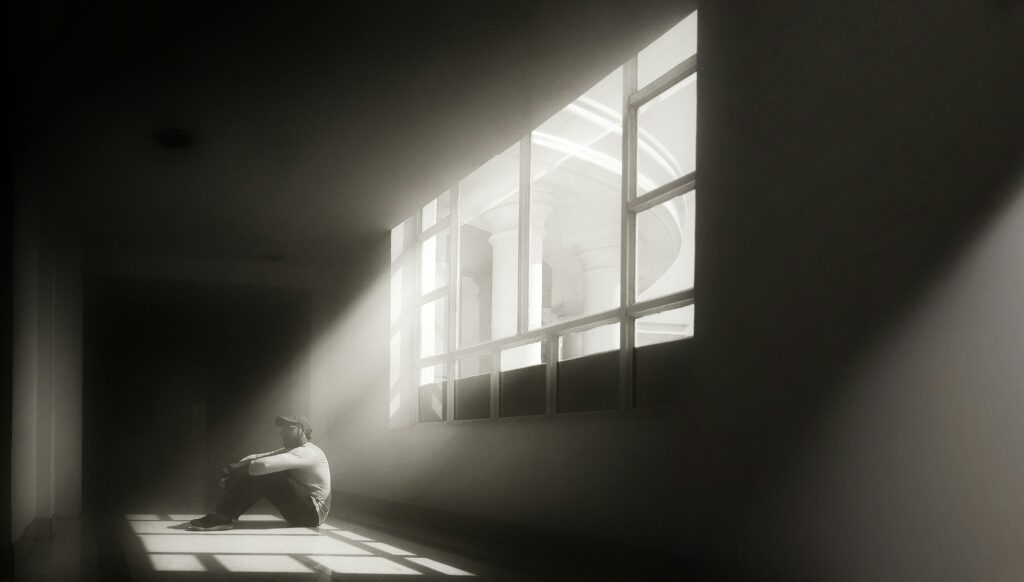
When most people picture depression, they picture the same thing: someone who can barely get out of bed, crying at nothing, withdrawn from the world. That image exists because it is real, some people with depression do experience it that way. But it is far from the only way depression appears, and the narrowness of that picture is part of why so many people living with depression don’t recognise it in themselves.
If you have been going through your days feeling something other than sad, something harder to name, or nothing at all, this article is for you. Depression wears many faces, and some of the most common ones look nothing like the clinical textbook version.
Why Depression Gets Missed
Before looking at the specific signs, it helps to understand why depression is so frequently overlooked, both by the people living with it and by the providers meant to catch it.
The diagnostic criteria for major depressive disorder, as outlined in the DSM-5-TR, require five or more symptoms over at least two weeks but here is the part that surprises most people: low mood is not required. The criteria specify that a person must experience either depressed mood or loss of interest or pleasure, one or the other, not necessarily both. A person who feels completely numb, or who is still showing up for everything but no longer enjoying any of it, may meet full criteria for major depression without ever feeling what they would call “sad.”
The result is that millions of people dismiss what they’re experiencing as stress, burnout, age, or personality and wait. According to the National Alliance on Mental Illness, the average time between the onset of depression symptoms and receiving treatment is 11 years. That is not because the condition is rare. It is largely because the condition is unrecognised.
The Signs That Often Go Unnamed
Anhedonia — the loss of pleasure
Anhedonia is the clinical term for the diminished ability to feel pleasure in activities that previously brought it. It is considered one of the two core symptoms of depression and, in many ways, the most telling one. You still do the things you used to love. You still go to the concerts, the dinners, the weekends that once felt restorative. But something is missing from the inside of the experience. You go through the motions and feel, at the centre of it, a kind of grey blankness where the enjoyment used to be.
People with anhedonia often describe it as watching their life from a slight distance, present in the scene but not quite in it. Hobbies feel like obligations. Relationships feel like performances. Things that used to restore you now leave you exactly as depleted as when you started.
This is one of the most widely missed symptoms of depression because it doesn’t produce the outward signals we associate with being unwell. You’re still functioning. You’re still showing up. Nobody looking at your life from the outside would know.

Irritability and a short fuse
Depression is significantly more likely to present as irritability in men than in women, and this is one of the main reasons depression in men is chronically underdiagnosed. But women experience it too, particularly in the perimenopausal period, and in presentations that sit alongside anxiety.
The irritability of depression has a particular quality: it is disproportionate, it is exhausting to experience from the inside, and it is often directed at the people closest to you. A frustration that should be minor produces a reaction that is not. A comment that wouldn’t have registered six months ago now lands like a personal attack. You snap, and then you feel ashamed of snapping, which depletes you further, which makes you more reactive. The cycle is demoralising.
Many people living with this form of depression describe it as feeling like everything is too much, too loud, too demanding, too close. Not sadness exactly, but a kind of raw sensitivity to irritation that wasn’t there before.
Fatigue that sleep doesn’t fix
The exhaustion of depression is not ordinary tiredness. It is a heaviness that settles into the body and doesn’t lift with rest. You sleep eight hours and wake up feeling as though you didn’t sleep at all. You sit down for ten minutes and feel like you’ve been running. Tasks that previously required no particular effort now feel as though they demand far more than you have to give.
This fatigue is one of the reasons depression so often gets mistaken for physical illness. People visit their GP with fatigue, aching, and difficulty concentrating, run through tests that come back clear, and are sent home without anyone checking for depression. The body is not separate from the mind, and depression reliably produces physical symptoms, including fatigue that is as real and as debilitating as fatigue from any medical condition.
Brain fog and difficulty concentrating
Depression impairs cognitive function in ways that are measurable and clinically documented. Difficulty concentrating, slowed processing speed, trouble retaining information, and a kind of mental blankness when you need your thinking to be clear, these are features of the depressive episode, not signs that something separate is wrong with your brain.
For high-functioning people, this cognitive dimension of depression is often the first sign that something is off. The person who was always sharp starts finding meetings harder to follow. The writer who always had words starts staring at blank pages. The decisions that once came quickly now feel impossible to make. This is often dismissed as stress, age, or distraction, when in fact it is a symptom that responds to treatment.
Emotional numbness — not sad, nothing
If you asked many people with depression to describe their emotional experience, they would say not “I feel sad” but “I feel nothing.” The clinical term is emotional blunting — a flattening of the affective range that leaves the person able to intellectually register events without feeling them emotionally.
You receive good news and feel nothing particular. Something that should frighten you produces no fear. Someone tells you something that should move you, and you sit there, aware that you’re not moved, wondering what that means about you. The numbness can be more alarming than sadness because it is so profoundly unfamiliar — and because it is invisible to everyone else.
Withdrawing without knowing why
Depression is frequently social in its expression a slow, often unconscious pulling away from the people and activities that connection requires. Texts don’t get answered. Invitations get declined, or accepted and then cancelled. The energy that social interaction requires starts to feel simply unavailable. You don’t necessarily feel sad about this withdrawal; you may not feel anything in particular about it, or you may feel mild relief at the reduced demand.
Over time, the isolation compounds the depression, because human connection is one of the most potent natural buffers against low mood. But in the moment, withdrawal feels like the only available response to a nervous system that is already overloaded.
The High-Functioning Dimension
A significant proportion of people with depression function at a high level throughout their episode. They go to work. They take care of their children. They meet deadlines. They show up. The depression exists alongside the functioning, it does not replace it and this leads many high-functioning people to conclude that what they are experiencing cannot really be depression.
This conclusion is incorrect, but it is understandable. The image of depression as incompatibility with normal functioning is deeply embedded, and it keeps people from seeking help. The truth is that functioning is a coping strategy, not evidence of wellness. And maintaining that functioning while depressed is an enormous expenditure of energy energy that is taken from everything else: from presence, from joy, from rest, from the things that make life feel worth the effort.
High-functioning depression is sometimes called “smiling depression” in popular writing. The clinical reality is that it is simply depression — experienced by someone who has learned, for any number of reasons, to perform wellness. The performance does not mean the condition is mild. It means the person is working harder than anyone knows.
What Makes This Version of Depression Worth Treating
Some people hesitate to seek help for depression that doesn’t match the textbook picture because they feel — somehow — that they don’t have it badly enough. That the person across town who can’t get out of bed deserves the appointment more than they do.
This reasoning, however compassionate it may feel, is simply not how medicine works. If your quality of life is diminished, if the colour has left your days, if the patience has left your relationships, if the joy has left the things that used to bring it, that is a clinical reality that responds to treatment. The severity of the visible symptoms does not determine the legitimacy of the suffering or the appropriateness of care.
Frequently Asked Questions
Can you have depression without feeling sad?
Yes. The diagnostic criteria for major depressive disorder require either depressed mood or loss of interest and pleasure not both, and not necessarily sadness as the predominant feeling. Irritability, numbness, fatigue, and cognitive difficulty are all recognised features of depression that can present without prominent sadness.
Is irritability always a sign of depression?
Irritability has many possible causes — stress, poor sleep, anxiety, hormonal changes, and situational factors among them. When irritability is persistent, disproportionate, out of character, and accompanied by other changes such as fatigue, loss of interest, or cognitive difficulty, it is worth discussing with a provider.
How do I know if what I’m feeling is depression or just a hard period?
A few markers are useful: duration (two weeks or more), pervasiveness (affecting multiple areas of your life, not just one), and functional impact (making ordinary things harder than they should be). The distinction between a hard period and clinical depression isn’t always clear-cut from the inside, which is why a clinical evaluation, rather than a self-assessment, is the most reliable way to know.
Depression doesn’t always look the way you expect it to and the version you’re living with is still worth treating, whatever it looks like. Eva Kirara, MSN, PMHNP-BC offers 100% telehealth psychiatric care with same-week appointments and no referral needed, for adults in Texas, New York, Arizona, and Vermont. Visit lifewisementalhealth.com or call 737-325-1490.
If you’re in crisis or thinking about harming yourself, call or text 988 (Suicide and Crisis Lifeline), available 24/7. If you’re in immediate danger, call 911.