
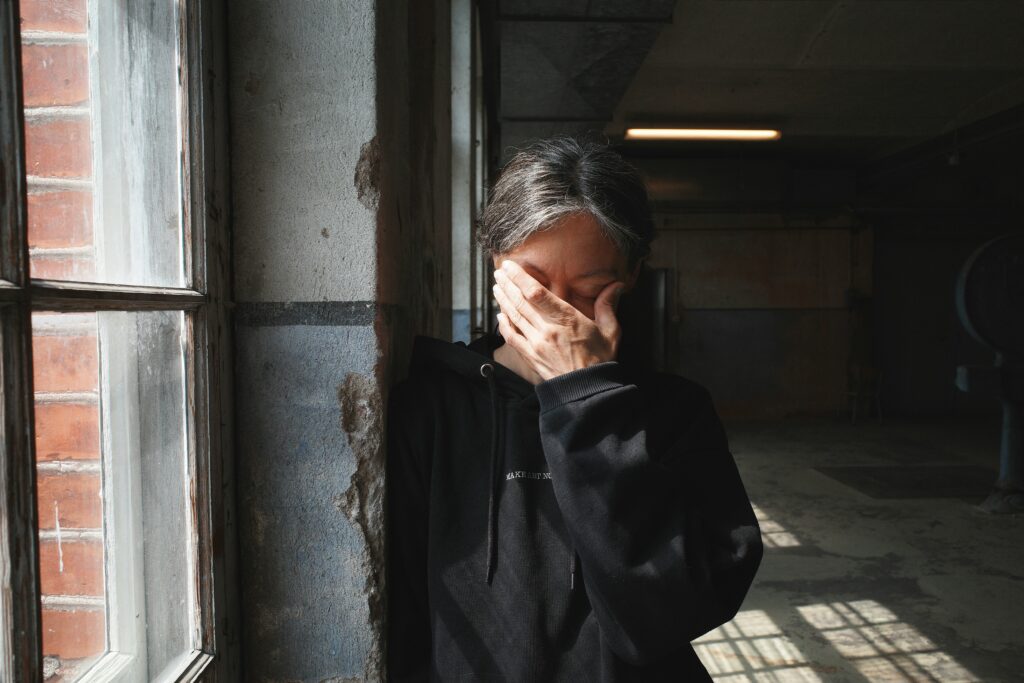
Somewhere in her 40s, a woman who has never struggled much with anxiety starts having panic-like episodes for no clear reason. Or a woman with no history of depression finds herself flat, irritable, and unable to shake a low mood that doesn’t match anything happening in her life. Both are common stories, and both are frequently misread, by the women experiencing them and sometimes by the providers they see, as “just stress” or “just getting older.”
A recent industry survey found that roughly one in three women don’t know perimenopause can cause anxiety, depression, or significant mood changes at all. That’s a striking gap, especially given that research consistently shows a two-to-four-times higher risk of clinical depression during the perimenopausal transition compared to the years before it. This isn’t a minor footnote of menopause, for a meaningful number of women, it’s one of the most disruptive parts of it.
What Perimenopause Actually Is
Perimenopause is the transitional window leading up to menopause, when the ovaries gradually produce less estrogen and progesterone. It typically begins in the 40s (sometimes late 30s) and can last anywhere from a few years to a decade before menopause itself. The hallmark of this phase isn’t a steady decline in hormones, it’s fluctuation. Estrogen levels can swing significantly from week to week or even day to day, and that instability, more than the eventual lower baseline, appears to be a major driver of mood symptoms.
The Hormone-Mood Connection
Estrogen isn’t just a reproductive hormone, it interacts directly with the brain’s neurotransmitter systems, including serotonin and GABA, both of which play central roles in mood and anxiety regulation. When estrogen levels are erratic, the systems that normally keep mood relatively stable can become erratic too. This is the same underlying mechanism, incidentally, behind why some women experience mood symptoms tied to their menstrual cycle (PMDD) or after childbirth (postpartum depression), reproductive hormone shifts and mood are deeply connected across a woman’s life, and perimenopause is one more chapter of that same story.
What Perimenopausal Mental Health Symptoms Actually Look Like
They’re often different from what people expect “menopause symptoms” to look like:
- New-onset anxiety or panic symptoms in women with no prior anxiety history
- Increased irritability that feels disproportionate to the situation
- Depressive symptoms — low mood, loss of interest, fatigue, that don’t clearly connect to a life event
- Brain fog and difficulty concentrating, which can itself worsen anxiety about “losing your edge”
- Sleep disruption, often from night sweats but also from anxiety itself, which compounds mood symptoms further
- Heightened emotional reactivity — crying more easily, feeling “on edge” without an obvious trigger
Because these symptoms overlap with ordinary midlife stress (careers, aging parents, kids leaving home), they’re easy to misattribute — which is exactly how so many women end up not connecting the dots to perimenopause at all.
Why It Gets Missed or Dismissed
A few things converge here. Many women aren’t told this is a possibility, so they don’t bring it up. Many primary care visits don’t include a structured conversation about mood during this life stage unless the patient raises it first. And mental health symptoms in general still carry a “push through it” stigma that gets amplified by “this is just what happens as you age” framing. The result is a lot of women managing real, treatable symptoms for months or years longer than necessary.
What Actually Helps
The good news is that perimenopausal anxiety and depression are treatable, and treatment doesn’t have to mean choosing one lane over another.
Psychiatric evaluation and medication management. SSRIs and SNRIs, the same medication classes used for anxiety and depression more broadly, are well-studied and effective for perimenopausal mood symptoms, and some also help with hot flashes, which is a useful secondary benefit for many women.
Hormone therapy coordination. For some women, hormone therapy (managed by an OB/GYN) meaningfully improves mood symptoms alongside physical ones. This is a conversation worth having with both a gynecologic and a psychiatric provider, since the two forms of care work best in coordination rather than in isolation.
Therapy. Cognitive behavioral therapy and other talk therapy approaches remain effective for managing the anxiety and depressive symptoms that come with this transition, particularly alongside medical treatment.
Sleep and lifestyle support. Addressing sleep disruption directly (rather than assuming it will resolve on its own) often has an outsized effect on daytime mood and anxiety.
The most important shift, though, is simply recognizing that these symptoms deserve a real evaluation, not private confusion about “what’s wrong with me lately.”
When to Seek Help
If you’re in your 40s or 50s and noticing new or worsening anxiety, mood swings, irritability, or depressive symptoms — especially alongside changes in your menstrual cycle, sleep, or hot flashes, that’s a reasonable, well-supported time to talk to a provider. You don’t need to wait until symptoms become severe, and you don’t need to already know whether it’s “hormonal” or “just stress” before booking an appointment. That’s exactly what the evaluation is for.
Getting Care That Takes This Seriously
At Lifewise Mental Health, our licensed psychiatric nurse practitioner provides evidence-based evaluation and treatment for the anxiety, depression, and mood changes that show up during perimenopause and menopause, with a full picture of your history, not a dismissive “that’s just aging” response. Care is delivered by secure telehealth to Texas, New York, Arizona, and Vermont, with same-week appointments typically available.